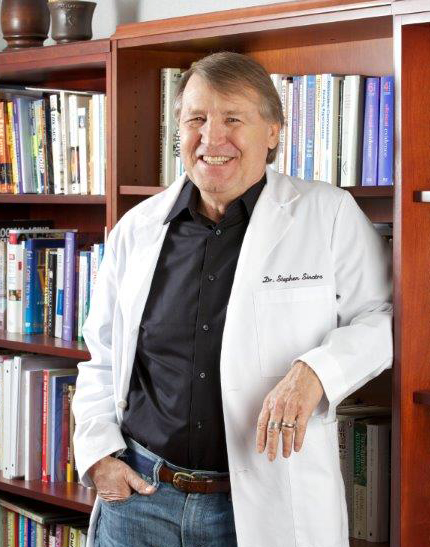




By Stephen T. Sinatra, M.D., F.A.C.C., F.A.C.N., C.N.S., C.B.T.
Mary
“When I first saw Mary in the intensive care unit in Connecticut’s Manchester Memorial Hospital in October of 1996, she lay comatose and respirator dependent, responding only to verbal command and pain stimulation. Sadly, her days appeared numbered. Recently transferred from another community hospital, Mary was suffering from congestive heart failure complicated by pneumonia. She was seventy-nine years old, and, except for childbirth, it was the only time she had been admitted to a hospital. Until now, she had been a healthy, vibrant woman.
Mary’s son, Bob, a Ph.D. biochemist, was an expert in coenzyme Q10 and other nutritional supplements. He had asked the doctors at the community hospital if he could place his mother on coenzyme Q10, but they’d refused. He had brought in realms of research literature for them to read and review, but the doctors still wouldn’t hear of it. Bob became so upset that he finally went directly to the hospital administration, but instead of interceding on his behalf, they asked him to leave the hospital. Lawyers became involved. It was a disaster.
Because of their lack of knowledge about coenzyme Q10, as well as their fear about and bias against nonconventional therapies, the doctors refused to even consider this alternative treatment for Mary. Her concerned family was labeled “interfering.” Rather than read the research brought to them and try a no-side-effect substance that’s made naturally by the body, Mary’s doctors stood by their foreign-to-the-body drug solutions, despite the fact that they obviously weren’t enough. Instead of yielding to the only hope that Bob felt they had, Mary’s physicians asked her family to discontinue life support. But to Mary’s credit, on both of those occasions, her loving daughter staunchly refused to “pull the plug” on her mom.
When Bob reached me by telephone, I was very direct. “I can’t possibly take your mother in transfer. They’ll have to bag breathe her for over forty minutes in the ambulance. That’s too long. She’ll probably die,” I had to warn him. The quick reply was, “At least with you she’ll have a fighting chance, Doc. Because if she stays where she is, she’s certainly going to die.”
Bob agreed that the family would accept responsibility for his mother’s shaky transfer – and her life. They were willing to take that chance. Funny, the hospital was willing to take Mary off the respirator, but then blocked the family’s attempt to transfer her out, declaring that her own children were jeopardizing her life. Luckily, the hospital’s attorney struggled with his decision, but finally agreed to give Mary that fighting chance.
Mary’s body and spirit survived that trip to Manchester Memorial and she was brought directly into intensive care where she was placed back on full respiratory support with the same ventilatory settings. The only change I made to her therapy was nutritional: the addition of 450 daily mg coenzyme Q10 delivered daily through her feeding tube. Mary also received a multivitamin/mineral preparation of my design, in addition to one gram of magnesium intravenously on a daily basis.
I did see some hope for Mary after she endured that move. But, despite the fact that I had lobbied to get coenzyme Q10 on our hospital formulary for several years, the other critical care doctors and nurses were extremely skeptical of using coenzyme Q10 in this life-threatening case. Mary looked like a train wreck with all her tubes and physical issues. What they were all about to observe was truly a resurrection.
On the third day, Mary started to come out of her coma. After ten days she was weaned off the ventilator. Four days later, Mary was sitting up in a wheelchair and using only supplemental oxygen. At that time, she was discharged to an extended care facility. Mary saw me in my office several times after her ultimate discharge to her own home. She enjoyed a good quality of life on conventional medical therapy plus 360 mg coenzyme Q10 per day, and even reorganized a vast library of about 3,000 books all by herself.
The day the hospital attorney came to visit her at her home, she baked him cookies – and then comforted him as he broke down and cried. He admitted that he’d almost prevented the ambulance ride that saved her life because he had believed hers to be a hopeless case. We all learned a lot from Mary and her children. She lived an additional six years and finally died of natural causes at age eighty-five.”
Joe
“Joe was nearly 60 when I first saw him in 1977. He was in bad shape for his age, with arteries so clogged that he lived on nitroglycerine to keep his angina at bay. His angiography results were worrisome to say the least – coronary arteries so narrow and diseased that bypass surgery had to be ruled out as a solution.
Joe was a treatment nightmare and his odds of living a long or comfortable life were slim. I share his story because, together, we found ways for him to age vibrantly, despite his poor circulation.
The traditional treatment three decades ago was to control Joe’s symptoms by slashing the oxygen demand on his heart with medications such as beta blockers, which hold down heart rate and blood pressure. A pacemaker guaranteed that we wouldn’t drop his heart rate too low with these drugs.
Being proactive patient, Joe asked me in 1980 about an alternative therapy he started researching – intravenous chelation. This therapy binds harmful substances like lead, cadmium and arsenic so the body can excrete them.
My recommendations on chelation have always varied from patient to patient, depending on the situation. I’ve seen it help several patients in the past who had angina, so, with that in mind, Joe and I discussed the pros and cons of this treatment as it pertained to his health situation. Ultimately, we decided that he should give it a try. Sixty treatments later he reported less chest pain and less of a need for nitroglycerine.
In addition, as I became increasingly interested in nutritional medicine in the mid 1980s, I started Joe on a multivitamin/mineral and antioxidant formula, as well as coenzyme Q10.
In 1987, Joe had another angiogram. Amazingly, it showed that one of his arteries was no worse than it was 10 years before, another artery was only slightly worse, and a third had actually improved. All of our efforts had helped stabilize his symptoms – a big accomplishment for a progressive disease like his.
Joe continued taking his supplements religiously and, several years later in the late 1990s, I added L-carnitine fumarate to Joe’s daily supplement routine. L-carnitine, like coenzyme Q10, is a substance your own body makes in order to turnover triphosphate (ATP), the basic fuel that gives your cells their energy.
These important substances decline with age and affect the ability of cells to carry out their specific functions. For ailing hearts, a shortage of these critical nutrients undermines the pumping action of the heart muscle. Supplementation helps restore energy and function to these starving cells, as well as to cells throughout the body. I also added fish oil and the enzyme nattokinase to help keep the blood thin and prevent clotting. In 2004, I added D-ribose.
With this program of targeted nutraceuticals, Joe’s health continued to improve.
Joe is now in his 90’s. Despite his advancing age and cardiac condition, and occasional stubborn shortness of breath, Joe’s overall quality of life has actually gotten better with age. I would even describe his progress as miraculous. Not only has he made it into his tenth decade against all odds, but he’s in much better shape than most of his counterparts.
I certainly can’t take all the credit for his success because Joe has contributed to his rehabilitation in a big way. He’s an exceptional patient with a positive attitude who walks two miles a day, follows a heart healthy diet, and has a strong spiritual life. To boot, he has a loving, supportive wife and strong friendships.
To me, Joe’s story represents two important lessons. First, it emphasizes the power of integrative medicine – using the best conventional and alternative medicine can offer. Second, it’s all about the power of personal responsibility. Joe wasn’t healthy when he started with me, but he resisted a passive “take care of me” attitude, made the effort, never gave up and became healthier as he aged. He added quality of years to his life… that’s what healthy aging is about.”
Helen
“Helen presents a similar story [to Mary’s] of surviving all odds. Helen had her first heart attack at age sixty-two, which was quickly followed by coronary artery bypass surgery (CABS) in 1979. Helen was one of seven children, and tragically all of her siblings had died of heart-related causes.She was literally the sole survivor in her own family. Thanks to a second successful coronary artery bypass surgery in 1987 and several PTCA (percutaneous transluminal coronary angioplasty) procedures, Helen was enjoying her eighty-fifth year and a fairly good quality of life on a combination of medical and complimentary therapies. She’d taken phytonutrient supplements for years, and by April 1998 she was taking the equivalent of 600 mg per day of coenzyme Q10 to support her cardiac function and boost her energy.
Then the bottom dropped out! Helen suddenly felt exhausted, and fell into despair. Her vital life force and her energy were completely sapped. In fact, it became a Herculean task for her to just get up from bed and sit in her chair. After battling heart problems for more than twenty years, Helen finally resigned herself to the fact that she was going to give into her long battle against chronic heart failure and vital exhaustion, and just die. When she arrived in my office, her breathing was labored and she was short of breath. Her energy level was completely depleted, and she had a haunted look in her eyes when she said one thing to me: she needed a miracle.
Although coenzyme Q10 had been a literal lifesaver for Helen up to that point, it was clear that she now needed something else to provide that extra “spark” and help her come alive again. Her body required something even more powerful to battle the severity of her heart problems and the ravages of advancing age. So in April of 1998, I added L-carnitine to her game plan, and she began taking it along with the coenzyme Q10.
Just four weeks later you would have hardly recognized Helen! The color in her cheeks was much pinker, she was breathing easier, and she was able to move around freely for the first time in weeks. Soon after, Helen was active and mobile, puttering around her house. And before you could say, “Rumplestiltskin!” she was leaving her home, zipping around shopping malls, and getting her own groceries again. And if all that wasn’t enough, Helen was even able to reduce her dependency on some of her prescription drugs, particularly nitroglycerine! Obviously, advancing age is no longer a reason to throw in the towel…”
George
“‘Let’s face it, George, you have a dead heart.’ Imagine hearing your cardiologist say those words to you!
In 1998, George was in the hospital in a desperate state. He had an ejection fraction*of 14 percent. His physician thought he had an infection in his heart, so George was placed on antibiotics, but it was soon determined that what George really had was congestive heart failure. George and his wife refused invasive surgery and signed him out of the hospital against the advice and protestations of his doctor.
On subsequent visits to two cardiologists, George was prescribed diuretics to rid him of excess fluids and a variety of drugs to help his heart beat more strongly. Even though the fluid was controlled, George’s heart continues to decline. Then one day he heard those harsh words that sounded like a death sentence: ‘Let’s face it, George. You have a dead heart.’
It was at that point that his son-in-law, a chiropractor, jumped into the fray. Frustrated and disappointed with what traditional medicine had been able to do for their dad, he arranged for George to be put on a combination of L-carnitine and coenzyme Q10, and it was a good thing he did! Within weeks George felt better, especially after I increased his dose of coenzyme Q10. His quality of life has improved and an update on his last echocardiogram showed an ejection fraction of 62 percent. That’s within a normal, healthy-heart range! George and his wife are convinced that the combination of L-carnitine and coenzyme Q10 literally brought his heart back to life! I continue[d] to see George on a regular basis 5 years after he heard those dreadful words.”
Jane
“Mary Anne tells the story of her grandmother, Jane. Jane is a young ninety-seven-year-old mother of four who adores her seven grandchildren and two great grandchildren. She’s a retired kindergarten teacher, book reviewer, floral designer, and homemaker who’s been active in her church her entire life. Jane, who lives at home with her son, likes to paint with watercolors, cook, play bridge, and watch sports on TV.
In 2003, Jane (better known as GG for “great-grandmother”) was hit hard by congestive heart failure. She was so short of breath and so weak that she could barely get out of bed, let alone walk about. It was impossible for her to move from a car to her apartment without stopping to catch her breath. Jane was finally hospitalized in intensive care and placed on respiratory support. She had thought she had finally reached the end of a good, long life. Although she continued to fight and was ultimately discharged from the hospital, she needed supplemental oxygen at home. She remained weak and exhausted for months following her discharge.
Jane’s granddaughter MJ, a nurse, had heard about D-ribose and decided that her grandmother give it a try, so she advised Jane to take it twice daily with her meals. Jane’s doctor approved, feeling it could do no harm. Within a few short days after starting the new regimen, Jane’s shortness of breath was gone and she was off the supplemental oxygen. After only a couple of weeks her energy level increased dramatically. She was back on the golf course, and the symptoms of her congestive heart failure were no longer imposing on her quality of life. Eight months later, Jane reported that she had no shortness of breath at all, and that she felt ‘better than I have in years.'”
Tommy
“I’d like to share another miracle: Tommy, a forty-two-year-old real estate businessman, also heard a distant death knell. After an unexpected and severe case of possible myocarditis (infection of the sac and heart muscle), Tommy’s heart was badly damaged. His [ejection fraction*] was so low, and his heart’s pumping so ineffective, that the surgical team for the esteemed Dr. Michael E. DeBakey in Houston, Texas, advised him that his only hope was to hang on long enough for a heart transplant.
Then his devoted cardiac rehabilitation nurse, Kathy, heard me speak about coenzyme Q10 at a cardiology conference. After getting my advice about dosing, she convinced his cardiologists to give it a try. After all, Tommy had nothing to lose and everything to gain. Thanks to Kathy and his unbiased, willing-to-give-it-a-go physicians in Chapel Hill, South Carolina, Tommy’s heart recovered in only eight weeks. When he flew back to Houston for medical follow-up, the team agreed that Tommy no longer needed that heart transplant, and they, too, cleared him to go back to his real estate business and active lifestyle.”
Kathryn
“A non-pharmacological, non-invasive treatment made all the difference for [Kathryn,] a younger woman whose congestive heart failure (CHF) resulted from cardiomyopathy (a weakening of the heart’s left ventricle that limits its pumping action).
Kathryn was diagnosed with congestive heart failure following a 1997 bone marrow transplant for non-Hodgkin’s lymphoma and subsequent thyroid treatment with radioactive iodine. The right side of her heart was particularly affected, and her ejection fraction* plummeted to 25 percent (normal range is 50 to 70 percent). Although she had no history of heart disease, she now had difficulty walking twenty feet and she was constantly gasping for breath.
Kathryn then became allergic to the ACE (angiotension converting inhibitors) she was given by her physician, and had similar reactions to other medications that were tried. The only heart drug she could tolerate was a beta blocker that failed to provide the kind of relief she so desperately needed. As she continued to weaken, Kathryn’s doctors finally had to admit that there was no more they could do for her. She went home feeling hopeless, depressed, and alone.
Kathryn was literally preparing her last will and testament when a friend, a chiropractor, called her with news of my work in metabolic cardiology. Kathryn immediately called for an appointment. After a careful review of her case, I ordered a more comprehensive blood work up, and started her on a regimen of nutritional therapy including L-carnitine and coenzyme Q10. Kathryn felt hope for the first time in months.
Kathryn’s condition improved over the next couple of months. Her ejection fraction rose to 45 percent. She had the strength to walk a mile and was able to do her housework and go shopping again. She was even well enough to work part-time for her church, go to parties, and travel with her husband, and do all the things she loved, but had been unable to enjoy because of her condition. As her progress continued, Kathryn was able to reduce her dosages of beta blockers and diuretics. Slowly, but steadily, she got her life back.”
All the stories above are excerpted from: The Sinatra Solution: Metabolic Cardiology, © 2011 Stephen T. Sinatra, M.D., F.A.C.C.