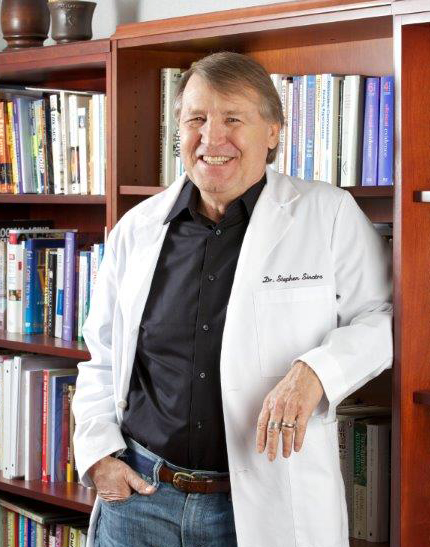



By Stephen T. Sinatra, M.D., F.A.C.C., F.A.C.N., C.N.S., C.B.T.
More Important than Ever…Even with all the magic that supplements and medication can provide, I have frequently reminded patients over the years about going back to basics in order to attain good health.
Exercise is one of the basics, important at any age, and even more so as you trek through your senior years. Consider this article a reminder not to shirk what your body was made to do: move.
To reinforce my understanding of just how important exercise is for seniors, in 2008 I contacted Tedd Mitchell, M.D., at the time medical director of the Cooper Clinic in Dallas, the world-famous fitness and preventive medicine mecca, and now president of the Texas Tech University Health Sciences Center. His book, Move Yourself (Wiley), co-authored with Timothy Church, M.D., Ph.D., a professor of preventive medicine at Louisiana State University, had just been published and I regarded it as one of the most powerful cases I ever read about the importance of physical movement and the consequences of inactivity. It was aimed squarely at the masses of exercise shirkers, a self-destructive species that Dr. Mitchell refers to as homo sedentarius. The book provides terrific insights as to why physical inactivity is such a risk factor for multiple health problems, more than even doctors imagine, and how just even a minimum of regular activity, much less than doctors generally recommend, brings immediate benefits. The book also provides a very inviting and fun-to-do program to jumpstart slackers.
For seniors, some degree of physical fitness goes far beyond cardiovascular health.
“Physical activity prevents, minimizes, and reverses the strength, flexibility, and functional slowdown that come with aging,” Dr. Mitchell told me. “It can preserve independent living longer into old age.”
As I often have reminded my patients, it’s never too late to start, even if you haven’t been active for years, and to get big benefits from modest exertion. A 2006 experiment, reported in Dr. Mitchell’s book, demonstrates that effect clearly. It was conducted at the University of South Florida and involved sedentary Florida seniors (average age of 83 1/2). Forty-five women and 19 men, all residents of an independent living facility, participated in 16 weeks of supervised resistance training and walking exercise. They were split into several groups. One did self-paced walking, a second did a simple resistance (strength) training program, and the third just continued on as an inactive group for comparison. The two active groups engaged in exercise just twice a week.
The participants were tested at the start of the trial and then again at the conclusion. Compared to the non-active group, the walkers and strength trainers made significant gains in functional fitness. The most substantial improvements in the walking group were in upper and lower body strength, coordination, and hip flexibility. The strength training group improved most in upper and lower body strength and coordination as well, but also in agility and balance.
“Adults older than eighty years are the fastest growing segment of the population and are more prone to a sedentary lifestyle,” Dr. Mitchell said. “Our research and clinical experience clearly show that previously sedentary adults at an advanced age have much quality of life to gain just by adding a bit of physical activity into their daily routines. The gains are all over the board, from strength to stamina to elevated mood and just being able to function better.”
Exercise on Behalf of Your Brain
The Cooper Clinic houses the world’s largest fitness database, funded since 1984 by the National Institute of Aging, and involving more than 85,000 patients and thousands of study participants. For many years, the data has enabled the clinic to lead the way in showing how important physical activity is to cardiovascular health as people get older. The data has shown that physical activity is one of the best tools to preserve cognitive health as well.
“One of the faults of Western medicine is that we have looked at the mind and body as separate entities when, in fact, the two are inextricably linked,” Dr. Mitchell pointed out. “There is, of course, increased blood flow to the brain as a result of exercise, but it’s more than that. When you do aerobic exercise, you produce a hormone called brain-derived neurotrophic factor (BDNF) which supports the preservation of existing neurons and the creation of new ones. The hormone is active in the hippocampus and prefrontal cortex, areas vital to learning, memory, and higher thinking.
“Exercise also increases levels of the neurotransmitters serotonin and dopamine. Serotonin is a mood elevator. People with depression are often prescribed SSRI (selective serotonin reuptake inhibitors) to keep the serotonin level up and make them feel better. But guess what? Exercise does that as well. Diminished dopamine results in diminished focus. Exercise boosts dopamine.”
In our interview, Dr. Mitchell went on to say that there is a natural decline in the speed of recall as we get older, a fall-off that differs distinctly from the decline of memory itself due to neurological illnesses such as Alzheimer’s. Everybody has some lapses here and there − perhaps you can’t remember where you left your glasses or the keys − but such episodes are different from actually losing chunks of your memory bank. Seniors who exercise regularly don’t have the same degree of recall slowdown, a benefit likely related to better cerebral blood flow and stimulation of brain chemistry.
Many folks get concerned as they age that because their ability to recall things quickly is diminished they may be getting dementia. The fact is that a slight decrease in rapidity of recall is normal. Even those seniors who exercise regularly will experience this, but not to the same extent as those who are sedentary. This is likely related to a number of factors, not the least of which is better cerebral blood flow and continued activation of the brain’s neurotransmitters.
Make Exercise a Habit
I have always encouraged patients to walk, dance, or participate in some other kind of routine physical activity. I also tell them that good exercise doesn’t have to involve running. According to Dr. Mitchell, the brain-boosting effects of exercise kick in substantially after a minimum of 20 minutes of walking at a pace that increases your respiratory and heart rate. When the cardiopulmonary system revs up − and your breathing rate and depth pick up, and you start perspiring − you enter into a training zone that also revs up the brain.
“For general health we always say that anything is better than nothing, but if someone is going to make physical activity a cornerstone to their preventive health plan, particularly with attention to better brain function, they should strive to exert themselves a bit,” he said. “You don’t have to jog for miles to get the brain benefits. But you have to move yourself. Your body was designed to move. The more days in the week you move, the better. Think in terms of at least doing this as part of your work week − five days a week.”
Swing Those Arms!!!
Here’s another insight learned from years of clinical practice and being a long-time jock myself. When you exercise or stretch, be sure to use a lot of arm motion. When you do you promote the removal of toxins through the lymphatic system, and particularly the thoracic lymph duct. Exercise is great for so many things, but most people don’t realize that it also help you detoxify.
There’s yet another fascinating background to arm movement that I shared with patients over the years. The heart forms in the seventh week of gestation. The lungs are the extension of the tissue of the heart and the arms form like buddings of the lungs at the ninth week. Embryonically, the heart is connected to the lungs and by extension to the arms.
What does that mean to you? Most people who have heart attacks experience pain in the left shoulder or left arm. That’s because the tissue is connected. In this context, it’s interesting to consider the concept of reaching out to someone with your arms or hugging someone. You are actually reaching out with your heart. You are going heart to heart, through your arms.
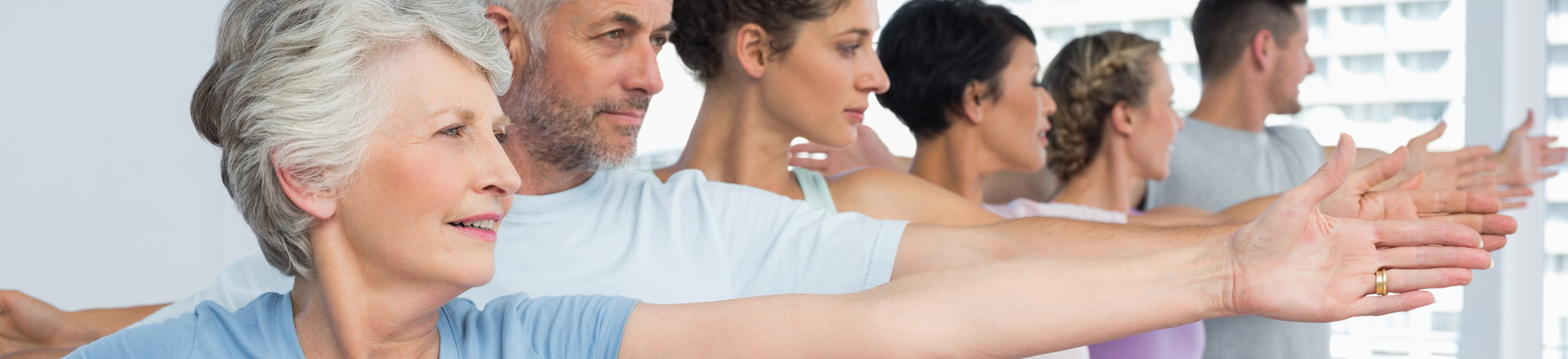
Whenever you use your arms you are working with the energy of the heart. Tai chi, the stretching in yoga (such as the Salute to the Sun), and brisk walking and pumping your arms, are examples of stimulating the heart through the arms. You can also stand in front of your stereo set and “conduct” the orchestra to your favorite slow music scores.
If you have heart disease, be more active with your arms as an adjunct way of healing the heart.
Senior Fitness Do’s and Don’ts
Dr. Mitchell and I compared notes and came up with these physical activity tips:
- If you haven’t exercised in a long while, or are unsure of how to develop a constructive fitness program for yourself, consult with a personal trainer experienced in helping seniors.
- If you have any medical conditions, such as osteoarthritis or cardiovascular disease, consult first with a physician specializing in sports medicine. You may have anatomical issues that require special considerations. Check out your feet with a sports podiatrist for any structural imbalances that might require shoe inserts. Protect yourself from the ground up.
- Older joints (ligaments, tendons, and muscles, as well) are not as forgiving as when we are younger, and require an appropriate level of training. If you train with weights, even light weights, to improve your functionality in daily life, you must use correct form to avoid microtrauma and aggravation to joints. That’s where a personal trainer can help. Work to strengthen the muscles around ailing joints. That also helps reduce pain.
- Got constipation? Exercise is the best way to relieve constipation, so common in the elderly. It seems to work better than any Metamucil, fiber, drinking water, or taking milk of magnesium.
References:
- Simons R, Andel R. The effects of resistance training and walking on functional fitness in advanced old age. J Aging Health, 2006; 18(1):91-105.
- Mitchell T, Church T, Zucker M. Move Yourself. Wiley, New York, 2008.
© 2013 HeartMD Institute. All rights reserved.